
BVOP® is the New Agile
Project
Management
Product
Management
People
Management
Waterfall
Scrum
Kanban
Lean
Productivity
Happiness
Motivation
Why do organizations need to adopt the BVOP now?
BVOP® transforms the way organizations manage both their projects and people. BVOP® is a superset for organizational, project, product, and people management. The BVOP can be applied to any Agile or Waterfall methodologies directly or modified depending on your needs.
The goals of the BVOP are to increase productivity, reduce wastes, and improve people's motivation and organizational atmosphere.
Why BVOP 

Get Certified
The BVOP® Certification program is for modern and open-minded professionals who strive for the success of others.
The Certification program is unique. You will face many challenges
Start today
The BVOP® Certificates
Certified Chief Executive
The BVOP® Chief Executive is the core driver of the Business Value-Oriented Principles and the most advanced figure who has the organization’s best interest.
Certified Program Director
The BVOP® Program Director manages the entire Program Management Office and possesses exceptional expertise and applies strategies.
Certified Agile Director
The BVOP® Director is the most advanced and important role inside Agile products and services-based organizations. Take it to the next level.
Certified Project Manager
The BVOP® Project Manager is an advanced and competent business, product, and technical role and a key factor for the success of the projects.
Certified Product Manager
With the advancing design, development, technical, and business knowledge, the BVOP® Product Manager is a master role and decision-maker for the products.
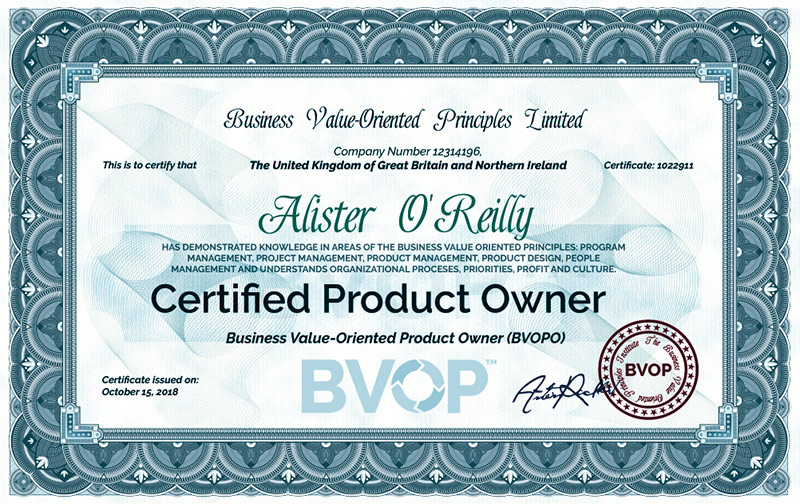
Certified Product Owner
Responsible and skilled BVOP® Product Owners balance both business and technical needs using Agile approaches and provide business value for products.
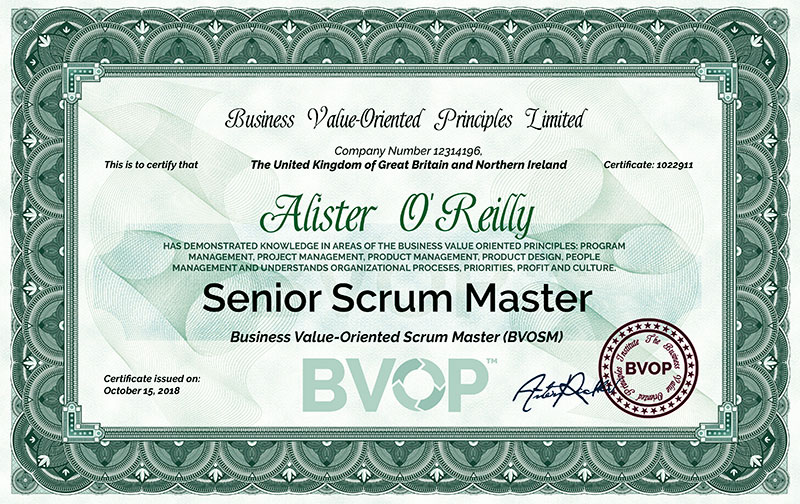
Senior Scrum Master Certification
The BVOP® Scrum Master role combines skills, Agile thinking, and project management practices to enchant processes, teams, and stakeholders.
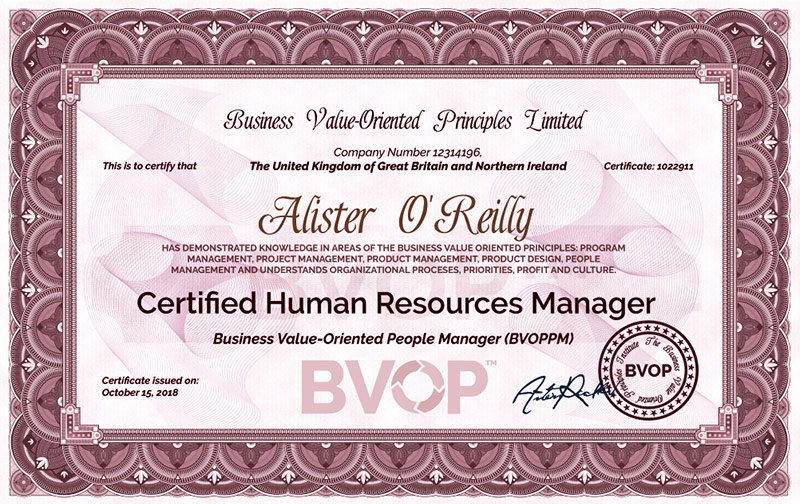
Certified Human Resources Manager
People are the greatest assets of any organization. It is important to find a balance between people and organization’s needs. Start the change today.
Latest Resources
- Hawthorne Effect
The Hawthorne Effect describes a project management occurrence where individuals modify their conduct, output, or reporting once they become aware that they are under observation, measurement, or assessment. This term has its roots in...
- Hierarchical Charts
Hierarchical charts are graphical representations that organize project components, responsibilities, or groupings into parent-child structures arranged from top to bottom. Within project management, these charts facilitate planning and organizational design by...
- Globalization in Distributed Project Teams
Globalization in distributed project teams refers to both the state and the process through which project activities, team interactions, and governance frameworks extend across numerous nations, time zones, cultures, and legal environments. In...
- Good Practices
Good Practices in project management encompass approaches, methodologies, procedures, and behavioral standards that have achieved widespread recognition among professionals because they enhance the probability of meeting project goals. ...
- Governance in Tailoring
Governance in tailoring refers to the organized framework of decision-making authority, supervisory controls, and defined limits that governs how project management processes, deliverables, and life cycles are customized for a particular...
- Funding Requirements
Funding requirements represent the planned quantity and schedule of monetary resources essential for carrying out a project in line with its sanctioned plan. Within project management, these align the cost baseline with organizational...
- Gantt Chart
A Gantt chart is a horizontal bar graph employed in project management to depict a project timeline across a period. It shows project activities on the vertical axis and calendar dates on the horizontal axis, with...
- Function Point
Function Point serves as a standardized measurement unit for assessing the functional size of a software application or component from the end-user's viewpoint. In project management, function point analysis aids in estimating effort...
- Funding Limitations
Funding limitations refer to restrictions on the quantity, schedule, or accessibility of monetary resources allocated to a project, program, or portfolio. Within project management, these constraints dictate which tasks can be approved, when...
- Forecasting Methods
Forecasting methods are systematic analytical approaches applied in project management to anticipate upcoming project circumstances, results, and performance using existing data, past records, expert insight, and...
- Forming Storming Norming Performing Adjourning
Forming Storming Norming Performing Adjourning is a five-phase framework for team evolution that outlines the expected behavioral and interpersonal stages a project team undergoes from initial formation to...
- Flowchart
A flowchart is a visual depiction of a process or workflow employing conventional symbols to illustrate tasks, decision nodes, inputs, outputs, and the sequence of work between steps. In project...
- Focus Groups
A focus group in project management is a facilitated, structured conversation among selected stakeholders and experts used to gather expectations, requirements, and perspectives regarding a proposed product, service,...
- Flow-Based Projects
A flow-based project is a project management strategy centered on the ongoing pull and completion of discrete work items as capacity permits, instead of relying on predetermined phases or time constraints. It utilizes...
- Flow-Based Scheduling
Flow-Based Scheduling is a pull-driven planning and execution approach in project management that structures work around uninterrupted flow, work-in-progress (WIP) constraints, and existing capacity instead of set task...
- Fixed-Price Contracts
Fixed-price contracts are procurement arrangements in project management where the seller commits to completing a well-defined scope of work for a set total amount, no matter what the actual costs turn out to be. This contract type places the cost risk primarily on the seller.
- Fixed Price with Economic Price Adjustment
Fixed Price with Economic Price Adjustment (FP-EPA) is a procurement contract type where the seller is paid a set fixed price for the agreed scope, yet that sum may be modified over the contract period. The adjustment typically accounts for economic factors such as inflation or currency fluctuations.
- Fixed Price Incentive Fee
A Fixed Price Incentive Fee (FPIF) contract is a fixed-price procurement arrangement in project management where the buyer and seller establish a target cost, target profit, price ceiling, and share ratio. This structure motivates the seller to control costs while allowing for additional profit if performance targets are met.
- Flow-Based Estimating
Flow-Based Estimating is a probabilistic forecasting method in project management that leverages historical throughput and cycle time to forecast when a given amount of work will be completed or how much work can be delivered within a specific timeframe. It is particularly useful in Agile and Kanban environments.
- Finish-to-Start Relationship
A finish-to-start relationship is a logical dependency in project management where a successor activity cannot begin until a predecessor activity has been completed. This dependency type is the most frequently used in project scheduling.
- Finish-to-Finish Relationship
A finish-to-finish relationship is a logical dependency between two project activities where the successor activity cannot be completed until the predecessor activity is finished. It is one of four standard activity dependency types used in project scheduling.
- Firm Fixed Price
A firm fixed price (FFP) contract is a procurement agreement where the buyer pays a set, non-adjustable amount for a defined scope of work, irrespective of the seller's actual costs. In project management, this contract type is often used when requirements are well-defined and stable.
- Fist of Five Voting
Fist of Five Voting is a structured consensus-building technique used in project management and Agile facilitation to rapidly gauge team support for a proposal. Participants show zero to five fingers, with a closed fist indicating strong opposition and five fingers indicating full support.
- Fees in Contracts
Fees in Contracts refer to the monetary compensation a buyer agrees to pay a seller or contractor for effort, expertise, and profit under a legally binding project agreement. In project management, this term frequently appears in discussions of contract types and procurement management.
- Finish Date
A finish date is the specific point in time when an activity, milestone, work package, phase, or project is completed. In project management, the term is seldom used without a qualifier such as planned, actual, scheduled, or baseline.
- Feature Completion Rates
Feature completion rates measure the proportion of planned features that a project team has fully delivered and had accepted by a defined point in a release, iteration, or project phase. This metric is widely used in Agile and software development contexts to track progress.
- Feedback Loops
A feedback loop in project management is a structured mechanism through which data about actual performance, deliverable quality, risks, or stakeholder reactions is collected and routed back into the project system to inform adjustments. It enables continuous improvement and adaptive management.
- Fast Tracking
Fast tracking is a schedule compression technique in project management that overlaps activities or phases normally performed in sequence to shorten the overall project duration. It does not alter the project scope or reduce the project's quality objectives.
- Feasibility
Feasibility is a structured assessment in project management used to determine whether a proposed project can be delivered successfully and whether its expected outcome justifies the required investment. Before formal project initiation, feasibility studies help decision-makers evaluate viability.
- Failure Analysis
Failure analysis is a structured diagnostic process used in project management to investigate failed project outcomes, phase breakdowns, or recurring delivery defects. It identifies root causes by separating cause from symptom and is essential for organizational learning.
- Failure Costs
Failure costs refer to the expenses an organization or project absorbs when services, processes, or deliverables do not satisfy established quality standards. Within project management, these costs represent one of the three categories in the cost of quality framework.
- External Failure Costs
External failure costs arise when a product, service, or deliverable fails after it has been delivered to the customer or end user. In the context of project management, they form part of the cost of quality framework.
- Extrinsic Motivation
Extrinsic motivation refers to the drive to carry out project tasks, achieve objectives, or follow process requirements due to external rewards, incentives, recognition, or consequences instead of inherent satisfaction. It contrasts with intrinsic motivation, which stems from personal interest or enjoyment.
- Fail Safe
A fail safe is a deliberately designed condition, mechanism, or plan state in project management that enables a project to contain a failure before it escalates into uncontrolled schedule, cost, or scope damage. The concept originates from engineering and safety-critical systems design.
- Explicit Knowledge
Explicit knowledge consists of codified, documented project information that can be shared, retrieved, and reused without depending on personal memory or face-to-face interaction. Examples include project charters, work breakdown structures, and other written artifacts.
- External Dependency
An external dependency is a relationship between a project activity and an input, deliverable, decision, or resource that falls outside the project team's direct control. It represents a prerequisite provided by an external party or factor.
- Expected Monetary Value
Expected Monetary Value (EMV) is a quantitative risk analysis technique in project management that multiplies each identified risk's probability by its monetary impact and sums the products to produce a single expected value. This figure helps project managers compare and prioritize risks objectively.
- Expert Judgment
Expert judgment is a project management technique that draws on specialized knowledge, experience, and insight from qualified individuals or groups to support decisions, estimates, risk evaluations, and other project activities. It is widely used across all knowledge areas and process groups.
- Exception Plan
An exception plan is a formal management document that replaces the current project plan or stage plan when performance is forecast to exceed agreed tolerances. In PRINCE2, it specifies the actions, resources, and adjustments needed to bring the project back within acceptable limits.
- Executing Process Group
The Executing Process Group is one of the five process groups defined by the Project Management Institute in the PMBOK Guide. It encompasses the processes required to complete the work described in the project management plan.
- Estimate to Complete
Estimate to Complete (ETC) is the expected cost required to finish all remaining project work at a specific point in the project lifecycle. It is a core forecasting measure within earned value management, widely used to predict final project costs.
- Estimating Methods
Estimating methods are structured techniques used in project management to forecast the effort, duration, cost, and resource requirements of project work. They convert scope information, historical data, assumptions, and other inputs into quantitative estimates.
- Escalation of Threats
Escalation of threats is a formal project risk response that moves a negative risk to a higher organizational authority when it exceeds the project manager's authority, requires resources outside the project, or cannot be effectively managed at the project level. This ensures the threat receives appropriate attention and resources from senior management.
- Estimate at Completion
Estimate at Completion (EAC) is a project management forecast of the total expected cost of a project once all remaining work is finished. It combines actual costs incurred to date with revised projections of remaining work.
- Enterprise-Level PMO
An Enterprise-Level PMO is a permanent organizational function that establishes centralized governance, standards, and strategic alignment for project, program, and portfolio management across the entire enterprise. It typically oversees resource allocation, methodology consistency, and alignment with organizational strategy.
- Environmental Considerations
Environmental considerations encompass the physical, regulatory, social, cultural, organizational, and sustainability elements that may influence a project or be influenced by it. Within project management, these factors establish the conditions under which the project must operate.
- Empowerment in High-Performing Project Teams
Empowerment in high-performing project teams refers to the intentional delegation of decision-making authority, resource control, information access, and outcome responsibility to team members within defined limits. It serves as a fundamental enabler of team effectiveness and success.
- Effort
Effort in project management represents the overall quantity of labor or work needed to finish a task, work package, deliverable, or project. It is usually expressed in person-hours, person-days, or full-time equivalents.
- Emotional Intelligence
Emotional intelligence in project management refers to the ability to identify, comprehend, manage, and leverage emotions in oneself and others to achieve project goals. It bridges psychological concepts with practical application in project settings.
- Eight-Step Process for Leading Change
The Eight-Step Process for Leading Change is a systematic framework for planning and executing organizational transformation, initially created by Harvard Business School professor John Kotter. In project and change management contexts, it provides a sequential approach to guiding successful change initiatives.
- Duration Estimates
Duration estimates are quantitative evaluations of the probable number of work periods needed to finish an activity, work package, or project phase given specified assumptions and resource availability. In project management, they are essential for scheduling and planning purposes.
- Earned Value Management
Earned Value Management (EVM) is a project management method that combines scope, schedule, and cost to assess project performance and progress using a single monetary baseline. It evaluates the worth of completed work against planned and actual costs.
- Development Life Cycle
The development life cycle refers to the series of phases, activities, and delivery choices employed to produce and refine the product, service, or result generated by a project. It functions within the larger project life cycle framework.
- DevOps Approach
The DevOps approach is a collaborative delivery strategy that unifies software development, IT operations, and associated functions into one continuous value stream. In project management, it structures workflows to enhance efficiency and integration.
- Discretionary Dependency
A discretionary dependency is a sequencing link between project activities founded on preferred practices, team expertise, or customary approaches rather than physical or contractual requirements. It is also known as a soft logic or preferential dependency.
- Drexler Sibbet Team Performance Model
The Drexler Sibbet Team Performance Model is a seven-phase framework that explains how teams develop, establish trust, clarify purpose, dedicate themselves to tasks, achieve outcomes, and eventually refresh or dissolve. In project management, it aids in guiding team dynamics and performance.
- Dependencies Types
Dependency types in project management are categories that specify how and why one project activity depends on another. The primary types include mandatory, discretionary, external, and internal dependencies, each influencing scheduling and risk.
- Deploy Phase
The Deploy Phase is the point in a project or product lifecycle where a designed, constructed, and validated deliverable is transitioned into the operational setting and provided to its target users. It signifies the shift from development to actual use.
- Design Reviews
Design reviews are organized assessments of a design deliverable within a project. They confirm that a proposed solution meets requirements, technical standards, and business goals prior to major investments or implementation.
- Development Approach and Life Cycle Performance Domain
The Development Approach and Life Cycle Performance Domain is a project management area that includes the tasks and functions related to choosing a development approach, organizing project phases, and managing the life cycle. It ensures alignment between project methods and objectives for effective delivery.
- Deliverables
Deliverables are distinct, confirmable outputs, outcomes, or competencies that must be produced to finish a process, phase, or project. They provide tangible structure to work and serve as the foundation for how teams plan, carry out, monitor, and conclude their efforts.
- Delivery Cadence
Delivery cadence refers to the consistent rhythm and rate at which project deliverables, increments, or value are finished, showcased, and transferred to stakeholders. It creates a dependable schedule for determining when these handovers occur.
- Delivery Measurements
Delivery measurements encompass the numerical and descriptive metrics employed in project management to evaluate if project outputs, work products, and anticipated benefits are finished and provided in line with established agreements. These indicators help track progress and ensure alignment with expectations.
- Delivery Models
Delivery models in project management consist of organized arrangements of lifecycle stages, development methods, governance mechanisms, team compositions, and delivery timing that transform project inputs into finished outputs. They provide a framework for structuring and executing projects effectively.
- Delivery Performance Domain
The Delivery Performance Domain is among the eight project performance domains outlined in A Guide to the Project Management Body of Knowledge, Seventh Edition. It focuses on the tasks and operations tied to delivering project outcomes.
- Decision Making
Decision making involves the procedure through which a project manager, team, sponsor, or governance entity chooses an action path from multiple options to advance the project toward its goals. In project management, this process is essential for guiding progress and addressing challenges.
- Decision Tree Analysis
Decision Tree Analysis is a methodical decision-aid tool applied in project management to assess options when faced with uncertainty. It depicts sequential choices, random events, and possible results in a branching structure to support informed decision making.
- Decoupling
Decoupling is a project management approach that intentionally isolates tasks, elements, systems, or choices to prevent a change, hold-up, or breakdown in one part from spreading to others. This strategy minimizes interconnected risks and enhances overall resilience.
- Definition of Done
The Definition of Done is a formal, collectively agreed-upon collection of standards that a deliverable or product increment must satisfy to be deemed finished. It creates a common quality benchmark by mandating that work meets specific criteria.
- Customer-Centric Organizations
Customer-centric organizations are groups that organize their governance, portfolio choices, program advantages, and project execution around the requirements, value hopes, and input from the individuals who utilize or get the results. This approach prioritizes stakeholder needs to drive success.
- Cycle Time Chart
A Cycle Time Chart is a visual tool that graphs the duration from when active work begins on an item until it is finished. In Agile and Lean project management, it shows specific cycle time figures to highlight trends and inefficiencies.
- Cynefin Framework
The Cynefin Framework is a sense-making tool that assists project, program, and portfolio managers in classifying issues and choices according to how cause and effect relate. It outlines five domains: clear, complicated, complex, chaotic, and disorder.
- Daily Standup
A daily standup is a brief, routine coordination gathering conducted by a project team each workday, usually capped at fifteen minutes, to align progress, identify roadblocks, and tweak the short-term plan. In Agile settings, it fosters quick communication and adaptability.
- Dashboards
Dashboards are graphical interfaces that bring together a project's key details onto one screen, allowing stakeholders to track performance, advancement, and status quickly. In project management, they offer immediate insights to support decision making.
- Cumulative Flow Diagram
A cumulative flow diagram is a visual project management instrument that shows how many work items are in each stage of a specified workflow across an ongoing timeframe. It uses a stacked area chart to represent workflow status and identify bottlenecks.
- Customer Centricity
Customer centricity is a strategic approach in project management that prioritizes customer needs, experiences, and desired outcomes in all project decisions. It ensures alignment across scoping, delivery, and benefits realization.
- Customer Requests
Customer Requests are formal or informal expressions of a customer's need, preference, expectation, or desired change that may require action from the project team. These requests enter the project environment through various channels and must be evaluated for their impact.
- Customer Satisfaction
Customer Satisfaction is the extent to which a project's deliverables, processes, and stakeholder interactions fulfill or surpass the expectations of the customer who commissions, funds, uses, or benefits from the project. It reflects the overall perception of how well the project meets customer needs.
- Critical Thinking
Critical thinking is the disciplined, evidence-based reasoning that project professionals use to interpret information, evaluate assumptions, and make sound judgments under uncertainty. It involves multiple cognitive processes rather than being a single, uniform method.
- Cross-Cultural Communication Model
The cross-cultural communication model is a structured framework for understanding, predicting, and interpreting how cultural values and assumptions shape information exchange, decision-making, and conflict resolution. It helps project teams navigate diverse cultural contexts effectively.
- Culture in Team
Culture in Team is the shared set of values, assumptions, behavioral norms, and unwritten rules that shape how project team members interact, make decisions, and resolve conflict. In project management, it functions as a critical factor influencing team dynamics and performance.
- Cost-Reimbursable Contracts
Cost-reimbursable contracts are a procurement agreement type in which the buyer reimburses the seller for all allowable costs incurred during project work and pays an additional fee representing profit. This structure shifts cost risk primarily to the buyer while incentivizing the seller to complete the work.
- Critical Path
The critical path is the longest sequence of dependent activities in a project schedule. It determines the earliest possible project finish date, and any delay to a task on the critical path delays the entire project.
- Critical Success Factor
A Critical Success Factor (CSF) is an essential element, condition, or activity that must be achieved or performed well for a project, program, or portfolio to meet its objectives. In project management, critical success factors help prioritize efforts and resources toward what matters most.
- Corrective Action
Corrective action is a deliberate, documented intervention used in project management to realign project work performance with the project management plan after a measured variance has occurred. It is a core component of the monitor and control processes.
- Correlation Versus Causation
Correlation versus causation is the project management discipline of distinguishing an observed statistical association between two variables from a proven causal relationship. It allows project managers to evaluate whether changes in one factor truly cause changes in another.
- Cost Baseline
In project management, a cost baseline is the approved, time-phased project budget that excludes management reserves and serves as the reference point for measuring and controlling cost performance. It represents the expected expenditure over the project timeline.
- Cost-Benefit Analysis
Cost-benefit analysis (CBA) is a structured evaluation method in project management that compares the total expected costs of an initiative with its total anticipated benefits to determine whether the investment is worthwhile. It supports informed decision-making by quantifying financial and non-financial impacts.
- Cost of Quality
Cost of Quality is the total cost incurred over the life of a project or product to prevent nonconformance to requirements, appraise conformance, and respond to failures. In project management, it combines the cost of prevention, appraisal, and failure to ensure quality standards are met.
- Cost Performance Index
Cost Performance Index, abbreviated as CPI, is an earned value management metric that measures the cost efficiency of project work by comparing the value of work completed to the actual costs spent. A CPI of 1.0 indicates that the project is performing exactly as budgeted.
- Cost Plus Award Fee
A Cost Plus Award Fee (CPAF) contract is a cost-reimbursement arrangement in project management in which the buyer covers the seller's allowable project costs and provides an extra award fee determined by performance. The award fee portion is typically tied to subjective evaluations of the seller's work against agreed criteria.
- Cost Plus Fixed Fee
Cost Plus Fixed Fee (CPFF) is a cost-reimbursable contract type in project management where the buyer pays the seller back for all allowable project costs incurred during the work, along with a fixed fee that was negotiated in advance. The fixed fee remains unchanged regardless of actual costs, providing the seller with a guaranteed profit amount.
- Cost Plus Incentive Fee
Cost Plus Incentive Fee, or CPIF, is a cost-reimbursable contract type used in project procurement management where the buyer repays the seller for allowable costs incurred and provides an incentive fee tied to performance targets. The incentive fee is adjusted based on how well the seller meets specified cost, schedule, or quality objectives.
- Cost Variance
Cost variance is a fundamental earned value management metric that measures the gap between the earned value of work completed and the actual costs incurred. In project management, cost variance is computed using the formula CV = EV minus AC.
- Conflict Management
Conflict management is the organized process of recognizing, tackling, and settling disputes among project stakeholders while maintaining productive working relationships and advancing project goals. In project management, effective conflict management helps prevent disagreements from escalating and derailing project success.
- Conflict Model
A conflict model is a structured framework used in project management to explain how disagreements emerge, intensify, and get resolved within project teams and among stakeholder groups. It classifies the sources of conflict, the stages of escalation, and the approaches available for resolution.
- Conscious and Unconscious Bias
Conscious and unconscious bias in project management refers to the overt and hidden preferences, assumptions, and mental shortcuts that influence how project managers, sponsors, team members, and stakeholders make decisions and interact. These biases can affect everything from resource allocation to risk assessment and team dynamics.
- Contingency Plans
A contingency plan is a pre-established response strategy that a project team puts into action when a particular risk event or trigger condition takes place. In project management, contingency plans outline the specific actions, resources, and responsibilities needed to address the risk.
- Contingency Reserve
A contingency reserve is the portion of time or money set aside within the project baseline to address identified risks that may or may not materialize. It is directly linked to the risk register and activated through planned response strategies.
- Continuous Delivery
Continuous Delivery is a software engineering and project delivery practice where code changes are automatically built, tested, and readied for production release through a consistent, repeatable pipeline. In project management, this approach supports faster and more reliable delivery of software products.
- What do I need to develop a project charter?
A project charter formally authorizes a project and gives the project manager the authority to allocate resources. To develop one, you need a business case, a clear problem statement, measurable objectives, key stakeholder input, and defined project boundaries.
- What do I need in place to start schedule control?
Schedule control is only as dependable as the structures that underpin it. Before you can effectively manage time and delivery, you need a clear schedule baseline, defined tracking responsibilities, and an agreed change process in place.
- What do I need before I can start identifying risks?
Risk identification is a crucial early step in project management, but starting without adequate preparation can result in overlooked threats and wasted effort. Before you begin identifying risks, you need a clear understanding of project objectives, scope, and stakeholder expectations.
- What do I need before I can start executing project work?
Executing project work without proper preparation leads to scope creep, missed deadlines, and budget overruns. Before you assign tasks or schedule the first milestone, you need several core elements in place, including an approved plan, defined roles, and available resources.
- What do I need before I can staff my project team?
Before you can staff a project team, you need defined scope, budget, and role requirements. Confirm stakeholder approvals and resource availability to avoid delays, and use this checklist to cover the essential prerequisites.
- What do I need before I can identify stakeholders?
Identifying stakeholders goes beyond simply compiling a roster of names. Before you can begin, you must gather the project charter, business case, procurement documentation, and any pertinent agreements or organizational process assets.
- What do I need before I can determine the project budget?
Establishing a project budget hinges on multiple foundational components that need to be in place prior to starting cost estimation. An approved scope, a decomposed work breakdown structure, a realistic schedule, and resource rates are all required.
- What do I need before estimating project costs?
Reliable project cost estimates require the correct inputs to be available before any calculations are made. A well-defined scope statement, a work breakdown structure, resource rates, schedule details, and risk contingencies are all necessary.
- What do I need before collecting project requirements?
Prior to gathering stakeholders for a workshop, make sure the project charter, scope boundaries, and decision-making authority are confirmed. These inputs guide the interview questions and keep requirements aligned with business objectives.
- What do I get out of team development activities?
Team development activities deliver tangible benefits for both individuals and the group as a whole. Participants usually develop improved communication abilities, increased trust among colleagues, clearer understanding of roles, and more effective methods for collaboration.
- What do I get from project performance reporting?
Performance reporting transforms unprocessed project data into actionable insights. It assists project managers in monitoring schedule, budget, and scope while providing stakeholders with a transparent picture of progress.
- What do I get after planning risk responses?
Once the Plan Risk Responses process is finished, you obtain a number of specific outputs. These generally consist of updates to the risk register, decisions regarding risk-related contracts, and modifications to the project management plan.
- What does the monitoring and controlling process group involve?
The monitoring and controlling process group is among the five process groups outlined in the PMBOK Guide. It oversees project work, measures actual performance against the project management plan, and suggests corrective actions.
- What does the Plan Procurements process involve?
The Plan Procurements process determines which project requirements can be fulfilled through the purchase of goods or services and records the procurement strategy. It encompasses make-or-buy analysis, preparation of procurement documents, and selection of contract types.
- What does the Initiating Process Group involve?
The Initiating Process Group represents the initial phase of project management and grants the formal authorization to launch a project or phase. Its emphasis is on defining the project at a broad level, recognizing key stakeholders, and securing approval to proceed.
- What does project cost management involve?
Project cost management refers to the practice of planning and regulating project expenditures to ensure they remain within the approved budget. It encompasses estimating costs, establishing a budget baseline, and tracking actual spending against that baseline.
- What does quantitative risk analysis add to the risk register?
A risk register generally records risks, their owners, and current status. Quantitative risk analysis enriches each entry with probability distributions, ranges for cost and schedule impacts, and expected monetary value.
- What does managing stakeholder expectations involve?
Managing stakeholder expectations requires an ongoing cycle of communication, alignment, and modification. Project managers need to establish achievable goals, record changes, and resolve issues promptly to avoid scope creep.
- What does it mean to administer a procurement contract?
Administering a procurement contract involves supervising the time following contract award to confirm the supplier fulfills delivery, quality, cost, and compliance obligations. It entails tracking performance, handling changes, and resolving disputes.
- What does identifying project risks involve, and who should participate?
Recognizing project risks is an essential component of project management. This article details the primary steps and techniques involved and describes who should take part in the process, ranging from project sponsors to operational staff.
- What does controlling project costs actually involve?
Controlling project costs involves establishing a realistic cost baseline, comparing actual performance to that baseline, and implementing corrective measures whenever deviations occur. This process also encompasses earned value management and the forecasting of future cost performance.
- What does a requirements management plan cover?
A requirements management plan specifies the approach for gathering, recording, evaluating, tracing, and governing project requirements. It generally addresses scope, baselines, traceability, change control procedures, and the responsibilities of team members.
- What does a risk management plan include?
A risk management plan describes the approach a project or organization uses to identify, assess, and address uncertainty. It commonly contains the risk methodology, assigned roles and responsibilities, risk categories, and probability and impact definitions.
- What does a project manager do?
A project manager is responsible for planning, coordinating, and supervising projects from start through finish. Their duties include defining scope, overseeing budgets and schedules, leading teams, and communicating with stakeholders to keep efforts aligned and on track.
- What does a project schedule network diagram include?
A project schedule network diagram visually represents the order of activities and the dependencies between them. It usually contains activity nodes, predecessor and successor relationships, durations, milestones, and the critical path.
- What does a procurement management plan include?
A procurement management plan establishes the approach a project will use to obtain goods and services. It generally addresses procurement roles, contract types, vendor selection criteria, cost estimates, scheduling, risk management, and legal considerations.
- What does a project manager actually do when executing the project?
Project execution is the phase in which a project manager shifts from planning to active supervision. This role involves coordinating the team, monitoring progress, managing risks, and communicating with stakeholders to keep the work on track.
- What does a Monte Carlo simulation reveal about project cost risk?
A Monte Carlo simulation converts a single project cost estimate into a probability distribution of potential total costs. It exposes the probability of exceeding the budget, the spectrum of plausible cost outcomes, and the confidence levels associated with each.
- What does a configuration management system with integrated change control achieve?
A configuration management system combined with integrated change control establishes a single authoritative source for project baselines. It guarantees that every proposed change is recorded, evaluated, approved, and documented before it can impact the project.
- What does a communications management plan usually include?
A communications management plan serves as the project's guide for how information will flow. It typically covers stakeholder communication needs, communication objectives, message types, target audiences, delivery methods, frequency, and responsible parties.
- What documents do I need to close out a procurement contract?
Procurement contract closeout documents verify that deliverables were accepted, final invoices were approved, and all parties waived future claims. A complete package usually contains the final invoice, acceptance documentation, and formal closure records.
- What documents are used to solicit proposals from sellers?
Selecting the appropriate documents for soliciting seller proposals is critical to achieving a clear and competitive procurement process. Frequently used documents include requests for proposal, requests for quotation, invitations for bid, and requests for information.
- What documentation do I get after staffing a project team?
Once a project team has been staffed, the documentation you receive typically formalizes roles, availability, and the overall team structure. Typical documents include a project staffing plan, a resource allocation sheet, and related assignment records.
- What documents and plans result from quality planning
Quality planning generates a specific set of documents and plans that guide how a project will satisfy its quality requirements. These outputs typically consist of the quality management plan, quality metrics, quality checklists, and process improvement plans.
- What deliverables and updates result from project cost control?
Project cost control generates a specific set of deliverables and updates, such as cost baselines, variance reports, revised forecasts, and change logs. These outputs provide project managers and stakeholders with the information needed to monitor and adjust financial performance.
- What criteria should I use to evaluate and select sellers?
The success of your project or procurement effort often hinges on picking the right seller. Before finalizing a vendor, a well-defined set of evaluation criteria lets you weigh quality, cost, reliability, and risk against one another.
- What contract types should I know about for project procurement?
Choosing an appropriate contract type sits at the heart of procurement planning for any project. Fixed-price, cost-reimbursable, and time and materials agreements each distribute risk and flexibility between the buyer and seller in distinct ways.
- What communication methods can I use for my project?
The communication methods you pick can either strengthen a project or undermine it. Which combination of daily standups and asynchronous updates works best depends on your team's size, geographic spread, and the complexity of the work.
- What configuration management activities are part of integrated change control?
Integrated change control is responsible for aligning changes across the project baseline. Through configuration management activities like configuration identification, status accounting, verification, and audit, only approved changes are allowed through.
- What characteristics does an effective project manager need?
The traits that make a project manager effective extend well past certifications and schedule management. Communication, leadership, adaptability, and risk management are what keep teams aligned and deliverables moving forward.
- What are the typical reporting relationships for a project manager?
It is common for project managers to report through multiple channels rather than a single line. Depending on how the organization is set up, a project manager's reporting relationships typically blend functional managers, project sponsors, and PMO leaders.
- What are the outcomes of monitoring and controlling risks?
Monitoring and controlling risks produces several concrete outcomes that influence project decisions. Among them are updates to the risk register, change requests, and refinements to risk response plans.
- What are the three types of activity dependencies?
For a project schedule to sequence tasks properly, clear activity relationships are essential. Mandatory, discretionary, and external dependencies make up the three primary categories, and each is shaped by its own set of constraints.
- What are the most common project organizational structures?
How authority, resources, and communication move through a project is determined by its organizational structure. Functional, matrix, and projectized models are the most frequently used, and each carries its own advantages and drawbacks.
- What are the main objectives of developing a project team?
Team development is an intentional effort that extends well beyond simply handing out assignments. Among its core objectives are fostering trust among members, defining roles and responsibilities clearly, and enhancing collaboration.
- What are the key processes in project human resource management?
Project human resource management provides the structure for how teams are planned, staffed, developed, and led. Planning human resource management, acquiring the project team, developing the project team, and managing the project team are the key processes involved.
- What are the key characteristics of a project life cycle?
The way work is planned, carried out, and brought to a close is shaped by the project life cycle. Distinct phases, stage gates, deliverables, and review points are among its key characteristics, guiding a project from initiation through completion.
- What are the four logical relationships in a network diagram?
Four logical relationships are used in a network diagram to show how project activities depend on one another. Finish-to-start, start-to-start, finish-to-finish, and start-to-finish are the relationships in question.
- What are the five process groups in project management?
Initiating, Planning, Executing, Monitoring and Controlling, and Closing make up the five process groups in project management. Together they form a framework that structures project work from the moment of initial approval through to closure.
- What are the five stages of team development?
Team development moves through five distinct stages: forming, storming, norming, performing, and adjourning. Every stage brings its own set of challenges and chances for collaboration to flourish.
- What are the final steps to formally close a procurement?
Shutting down a procurement properly involves much more than simply making the last payment. Before the process can be considered complete, project managers need to confirm that every contractual deliverable has been fulfilled, settle any remaining disputes, and compile all procurement records.
- What are the deliverables and outcomes of project execution?
Throughout project execution, the team generates deliverables and outcomes that showcase advancement and worth. Deliverables refer to the concrete products, services, or results outlined in the project scope, whereas outcomes represent the broader benefits or impacts those deliverables produce.
- What are the best strategies for positive project risks?
Opportunities, or positive project risks, have the potential to enhance schedule, cost, or quality results. The most effective response strategies include enhance, exploit, share, escalate, and accept, which assist project managers in capitalizing on favorable circumstances.
- What are the common probability distributions for risk analysis?
To model uncertainty, frequency, and severity, risk analysis relies on a limited collection of probability distributions. Normal, lognormal, triangular, PERT, Bernoulli, and Poisson distributions each suit different types of risk data and scenarios.
- What are activity attributes and what do they include?
Activity attributes capture the particular details tied to every activity within a project schedule. These details encompass identifiers, names, descriptions, predecessor and successor relationships, resource needs, and other relevant information.
- What are corrective actions, preventive actions, and defect repairs?
In project quality management, corrective actions, preventive actions, and defect repairs are handled as separate categories of response. Corrective actions fix nonconformities that have already happened, preventive actions avert future issues, and defect repairs address flawed deliverables.
- What are project phases and how do they relate to each other?
Project phases divide a project into manageable segments, usually moving from initiation through planning, execution, monitoring, and closure. Every phase yields its own deliverables, and the phases connect through sequential, overlapping, or iterative relationships.
- What are schedule network templates and when should I use them?
Schedule network templates offer a pre-built framework for arranging project activities and depicting their dependencies. Project managers use them to accelerate schedule development for repetitive or comparable projects.
- What are the benefits of using virtual teams?
Virtual teams provide organizations with a broader talent pool while cutting down on office, travel, and relocation expenses. Additional advantages of virtual teams include coverage across multiple time zones and increased flexibility for team members.
- What's the difference between contingency reserves and management reserves?
Contingency reserves and management reserves fulfill separate functions within project risk management. Contingency reserves address identified risks that have been accepted in the risk register, whereas management reserves are set aside for unforeseen risks that fall outside the original scope.
- What's a bidder conference and how do you ensure it's fair?
A bidder conference is a formal gathering where prospective suppliers pose questions and receive identical answers prior to submitting their proposals. Ensuring fairness requires equal access to information, uniform responses, and thorough documentation of all exchanges.
- What activities take place during project closure?
Project closure consists of a series of activities that officially conclude the work and hand over ownership. This includes finalizing deliverables, obtaining sign-off, closing out finances, releasing resources, and documenting lessons learned.
- What's the difference between a lead and a lag in project scheduling?
Lead and lag are two scheduling concepts that define how project activities are timed in relation to one another. A lead speeds up a successor task by permitting it to begin before its predecessor concludes, while a lag introduces a delay between activities.
- What's involved in closing a project or phase?
Closing a project or phase involves formally completing the work once deliverables have been accepted. This process includes verifying scope, obtaining sign-off, recording lessons learned, releasing resources, and archiving project documents.
- How reliable are early project cost estimates?
Estimating project costs during the initiation stage is highly uncertain. Research indicates that early estimates can deviate by 30% to over 100%, and this article explores the reasons behind that variability and offers approaches to refine initial estimates.
- How should I reward project team members effectively?
Effective team rewards go beyond simple cash bonuses or gift cards. Skilled managers customize recognition to match each person's motivations while ensuring equity, and this article presents practical, low-cost approaches to do so.
- How should I phrase a risk when adding it to my risk register?
For project risk management to work well, risks must be articulated clearly in the register. A strong risk statement uses a cause-event-effect format, which minimizes confusion and keeps stakeholders aligned.
- How is seller performance evaluated during a project?
To verify that deliverables satisfy contractual terms, project managers require a standardized method for assessing seller performance. Tracking quality, schedule compliance, and cost indicators through routine progress reviews supports this evaluation.
- How should you respond to threats in project risk management?
Threats encountered by project managers can disrupt schedules, budgets, and deliverables. The four main threat response strategies outlined in this article are essential for responding effectively and keeping the project on course.
- How do you calculate expected monetary value using a decision tree?
Decision trees convert intricate risk situations into a straightforward expected monetary value (EMV) that guides project choices. Weighting every potential outcome by its likelihood allows you to evaluate different options.
- How do you calculate a parametric estimate?
By leveraging historical data and statistical relationships, parametric estimating generates reliable project forecasts. Discover the formula, the data needed, and the calculation steps to use this method successfully in cost estimation.
- How do you carry out integrated change control?
Integrated change control guarantees that every requested change is assessed, authorized, and monitored throughout the entire project lifecycle. This approach harmonizes modifications to project baselines, reducing disruption and maintaining alignment.
- How do the Process Groups interact throughout a project?
The process groups in project management do not function as sequential stages. Instead, Initiating, Planning, Executing, Monitoring and Controlling, and Closing interact continuously, overlapping and repeating across the project's duration.
- How is project management different from operations management?
Project management focuses on producing temporary, unique results, whereas operations management maintains repeatable, continuous processes. The objectives, timeframes, and team compositions of each differ significantly, and recognizing when to use each method is crucial.
- How do you evaluate seller proposals and who should be involved?
A thorough and transparent evaluation process is necessary to choose the best seller. This article explains how to set clear criteria, score proposals uniformly, and determine which stakeholders should take part.
- How do you define risk probability and impact for qualitative risk analysis?
To achieve consistent priority ratings in qualitative risk analysis, risk probability and impact must be clearly defined. Without structured scales, team members' assessments can differ greatly, and this article demonstrates how to establish them.
- How do procurement audits help with contract closure?
Before closing a contract, procurement audits offer a systematic examination of deliverables, compliance, and documentation. They identify outstanding problems, confirm obligations, and avert disputes, which makes the final approval process smoother.
- How do quality audits and process analysis improve project quality?
By revealing workflow inefficiencies and the root causes of defects, quality audits and process analysis help teams stop quality problems before they worsen. These systematic reviews encourage ongoing improvement.
- How do project managers monitor and control work to keep projects on track?
To monitor progress, spot variances, and apply corrective measures, project managers depend on a structured monitoring and controlling process. This ongoing supervision keeps scope, schedule, and budget aligned.
- How do milestone, summary, and detailed schedules differ?
Three separate levels of project visibility and control are represented by milestone, summary, and detailed schedules. Milestones provide executives with high-level dates, summaries monitor deliverable progress, and detailed plans direct day-to-day work.
- How do networking and organizational theory support human resource planning?
Human resource planning leverages networking to pinpoint talent pools while applying organizational theory to align the workforce structurally. This article examines how both fields shape strategic HR choices, covering everything from talent acquisition to long-term planning.
- How do I share performance reports with project stakeholders?
Distributing performance reports to project stakeholders goes beyond simply emailing a PDF. An effective strategy blends concise summaries, visual dashboards, and a delivery timeline tailored to each stakeholder's requirements.
- How do project, program, and portfolio management differ?
Organizational work isn't managed uniformly across all levels. Project, program, and portfolio management represent three distinct tiers of planning, execution, and strategic alignment, and understanding their separate roles helps you apply the right approach.
- How do projects differ from ongoing operations?
Projects are temporary efforts with clear start and end points, created to deliver a one-of-a-kind result. Ongoing operations, by contrast, consist of repetitive tasks that keep the business running continuously, and recognizing this distinction is essential.
- How do project management processes differ from product-oriented processes?
Project management processes handle temporary initiatives with defined conclusions, while product-oriented processes support ongoing enhancement. Their key distinctions involve scope definition, lifecycle structure, and overall approach.
- How do teaming agreements work in procurement?
Teaming agreements establish the working arrangement between a prime contractor and subcontractor prior to contract award. These agreements specify how risks, duties, and earnings will be divided if the contract is secured.
- How do I resolve disputes before closing a procurement?
Supplier disputes that remain unresolved can derail procurement closeout and hold up project completion. Addressing issues early through transparent communication, proper documentation, and organized negotiation stops them from escalating.
- How do I distribute project information as planned?
Successful project communication depends on carrying out an information distribution plan effectively. Lacking a defined process, updates may fail to reach the right people, resulting in delays and stakeholder uncertainty.
- How do I forecast the estimate at completion?
Precise cost forecasting helps avoid budget overruns on any project. To address "How do I forecast the estimate at completion?" you need to grasp the essential EAC formulas and know when to use each one.
- How do I measure project performance with earned value management?
Project managers require objective techniques to monitor progress and predict results. Earned value management (EVM) merges scope, schedule, and cost information to address one crucial question: are we on track?
- How do I document make-or-buy decisions?
Recording make-or-buy decisions is vital for defending sourcing selections to stakeholders. A well-organized analysis details costs, risks, and strategic fit, which prevents second-guessing and guarantees consistency.
- How do I manage changes to the project?
Handling project changes is a fundamental competency for every project manager. Absent a formal change control process, even minor modifications can lead to scope creep, budget overruns, and missed deadlines.
- How do I monitor and control project work?
Monitoring and controlling project work ensures your project stays on track with the plan. This guide covers the process in detail, from tracking performance metrics to managing changes and reporting status.
- How do I document project roles and responsibilities?
Documenting roles clearly prevents scope creep, minimizes miscommunication, and establishes accountability from the outset. This guide demonstrates precisely how to define, assign, and record project roles using tools like a RACI chart.
- How do I manage my project team?
Leading a project team involves far more than handing out tasks. It calls for clear communication, building trust, and flexible leadership to keep everyone aligned and driven.
- How do I get the right people on my project team?
Building the correct project team can determine whether your initiative succeeds or fails. Every project manager must tackle the challenges of pinpointing required skills, attracting top talent, and getting stakeholders on the same page.
- How do I measure schedule performance?
Use earned value metrics to monitor schedule performance so you can catch delays before they ruin your project. This guide addresses SPI, SV, and actionable methods for achieving on-time delivery.
- How do I manage stakeholder expectations in a project?
Effectively handling stakeholder expectations is an essential capability for any successful project. When alignment is missing, projects become vulnerable to scope creep, blown deadlines, and unhappy clients. This guide explores tested approaches to involve stakeholders.
- How do I identify project stakeholders and document their interests?
Recognizing project stakeholders and recording their interests forms the basis of successful project management. This article describes how to methodically uncover every relevant party and document their concerns.
- How do I manage a project team to optimize performance?
An effective project team serves as the foundation for any successful delivery. This article outlines hands-on leadership strategies to enhance team productivity, ranging from establishing clear goals to building psychological safety.
- CSM (Certified ScrumMaster) — How to Become Certified: Steps, Training & Exam Preparation
Becoming CSM certified begins with a two-day Scrum Alliance course, followed by an online exam and continuous renewal. This guide addresses the CSM (Certified ScrumMaster) certification steps, training choices, and exam preparation strategies necessary to succeed.
- Management by Objectives (MBO) Process: Linking Goals and Performance
The Management by Objectives (MBO) process offers a structured approach to connecting goals and performance at the individual, team, and organizational levels. Through a cycle of planning, review, and evaluation, it transforms clear expected outcomes into measurable organizational results.
- What Is a 360-Degree Feedback Process? Steps, Pros, and Cons
A 360-degree feedback process is a multi-rater review that gathers structured input from peers, managers, direct reports, and occasionally customers to uncover strengths, blind spots, and development needs. Before adopting one, consider the advantages and disadvantages.
- Kotter's 8-Step Change Model: How to Lead Major Transformations
Kotter's 8-Step Change Model provides leaders with a defined sequence for guiding major transformations, starting with establishing urgency and ending with embedding change permanently. This framework enables organizations to move past command-and-control pressure and tackle the human dimensions of change.
- How to Manage Employee Relations Issues: Investigation and Resolution Process
Handling employee relations issues demands an impartial investigation and a well-defined resolution process. This guide demonstrates how to manage employee relations issues through investigation and resolution, from the initial complaint all the way to final follow-up, complete with practical advice.
- Agile vs Waterfall: Key Differences, Pros and Cons, and When to Use Each
The comparison of Agile versus Waterfall—covering key differences, pros and cons, and when to use each—shapes how work is structured, evaluated, and delivered. Teams that grasp these methodologies can select the best approach based on scope, budget, and stakeholder expectations.
- PMP Certification Training Course — Chicago, USA
The PMP Certification Training Course in Chicago, USA enables project managers to transform practical experience into an internationally recognized credential. Chicago's finance, healthcare, logistics, and consulting industries highly value professionals capable of leading complex projects.
- Best Digital Transformation Certifications for Executives and Consultants
The top digital transformation certifications for executives and consultants blend strategic frameworks with hands-on change management tools. This guide evaluates the leading programs designed for senior leaders and advisors who must propel transformation efforts.
- Certified Associate in Project Management (CAPM): Requirements, Exam, and Career Impact
CAPM certification requirements, exam structure, and career impact differ depending on experience level and industry. The Certified Associate in Project Management (CAPM) credential enables early-career professionals to showcase formal project management knowledge.
- Design Thinking Process: How to Apply the Five Stages in Business (With Examples)
Discover how to implement the design thinking process in business through this hands-on guide. The five stages—empathize, define, ideate, prototype, and test—offer a structured framework for problem-solving and fostering innovation, with real-world examples to explore.
- FMEA: How to Apply Failure Mode and Effects Analysis in Supply Chain Operations
Failure Mode and Effects Analysis (FMEA) provides supply chain operations teams with a systematic approach to spotting and mitigating risks before they lead to delayed shipments, halted production, or compliance breaches. Gaining proficiency in applying FMEA within supply chain operations enables teams to prioritize potential failures and implement controls that protect continuity.
- Lean Six Sigma Green Belt Certification: Training and Exam Preparation
Training and exam preparation for Lean Six Sigma Green Belt certification equip professionals with the capabilities to guide process improvement initiatives using the DMAIC framework. Obtaining a Green Belt credential demonstrates your ability to eliminate waste, interpret data, and contribute to broader improvement efforts.
- How to Conduct Stay Interviews to Improve Retention
Stay interviews enhance retention by uncovering from current employees what drives their engagement and what could prompt them to depart. This guide outlines how to carry out stay interviews effectively, covering the right questions, necessary preparation, and follow-up steps.
- Agile Transformation: How to Scale Agile Across Large Enterprises
Scaling agile across large enterprises requires far more than additional standups or Scrum Masters. An agile transformation reaches into strategy, budgeting, culture, and technology at a level that team-focused adoption never achieves, and this guide details how to scale agile throughout large organizations.
- How to Write Effective User Stories: INVEST Criteria and Acceptance Criteria
Knowing how to craft effective user stories goes beyond simply completing a template. The INVEST criteria paired with clearly defined acceptance criteria transform ambiguous feature requests into precise, actionable tasks that provide genuine user value, and this resource shows how these elements work together.
- Scenario Planning for Supply Chain Disruptions: Methods and Case Examples
A lone factory closure can send shockwaves across continents, revealing how vulnerable modern supply chains truly are. Scenario planning for supply chain disruptions provides a systematic approach to brace for these shocks, shifting away from single-point forecasts toward building resilience.
- Lean Startup Methodology in the Enterprise: Build-Measure-Learn for Corporate Innovation
Rigid stage-gate processes and lengthy budget cycles systematically undermine corporate innovation, exposing enterprises to nimble disruptors who leverage Lean Startup methodology. The Build-Measure-Learn cycle substitutes validated learning for inflexible planning.
- Waterfall Methodology: Phases, Documentation, and When to Use It
The phases, documentation requirements, and suitable applications of Waterfall methodology determine whether this sequential approach fits your project. Its linear stages and thorough documentation provide predictability for high-stakes settings where requirements remain stable.
- How to Become a Project Manager With No Experience: Step-by-Step Beginner Guide
Entering project management without direct experience is achievable by repositioning your current skills and adhering to a well-defined action plan. This guide explains how to become a project manager with no experience, addressing certifications, resume adjustments, and more.
- CSPO Certification — Product Owner Training & Exam Preparation
The Certified Scrum Product Owner (CSPO) certification confirms your proficiency in agile product management and delivering value. Unlike introductory user story sessions, comprehensive CSPO training equips you to handle real-world stakeholder alignment and backlog management.
- PSM I, II & III (Professional Scrum Master) — Certification Training and Exam Strategy
Obtaining a Professional Scrum Master (PSM) certification from Scrum.org demonstrates thorough Scrum knowledge and hands-on application abilities. This guide addresses training approaches, exam tactics for PSM I, II, and III, and ways to showcase practical Scrum expertise.
- PMP Certification Training Course — Los Angeles, USA
Achieving the PMP certification can transform a project manager's career path, and selecting the appropriate PMP Certification Training Course in Los Angeles, USA is frequently the initial intentional move in that journey. The city's varied industrial landscape offers unique opportunities for professional growth.
- The Coordination Cost Paradox: Why Adding More Collaboration Quietly Slows Your Company Down
Introducing additional collaboration tools and interaction points frequently appears to be a guaranteed method for enhancing alignment. However, each new interaction brings unseen coordination costs that gradually undermine productivity, creating a paradox where increased collaboration leads to slower outcomes.
- The Decision Throughput Problem: When Your Organization Can’t Process Choices Fast Enough
Decision throughput gauges how rapidly your organization can evaluate options and dedicate itself to action. When this capacity falls too low, strategic efforts falter, competitive edges weaken, and teams get stuck due to accumulated decisions, as this article explores.
- The Manager as an Information Router: Designing Teams Like High‑Bandwidth Networks
Each manager functions as an essential information router, determining which signals move where within the team. When this routing becomes sluggish or clogged, decisions halt and morale suffers, so here's how to design your team's communication channels for optimal flow.
- PRINCE2 Foundation Certification Training & Exam Preparation Course
PRINCE2 Foundation certification training serves as the initial stage for gaining proficiency in the PRINCE2 project management framework. Our exam preparation course addresses the interconnected principles, themes, and processes, preparing you to successfully obtain the AXELOS certification.
- The Alignment Paradox: Why Teams Agree on Goals but Still Work Against Each Other
Teams frequently exit strategy meetings with complete consensus on priorities, but weeks afterward they end up hindering one another's advancement. This phenomenon, referred to as the alignment paradox, exposes a deeper underlying tension that goes beyond superficial agreement.
- Executive Certificate in Corporate Strategy & Strategic Execution
Many senior managers concur that the difficult aspect of corporate strategy is not the concept itself, but rather strategic execution among individuals with conflicting priorities. An Executive Certificate in Corporate Strategy & Strategic Execution provides you with the means to connect strategic planning with effective implementation.
- The Cognitive Load Trap: How Work Reduces Leadership Capacity
Leaders who perform at high levels frequently become swamped by everyday responsibilities, forfeiting the mental sharpness required for strategic choices. Cognitive load, the unseen burden of continuously handling information, diminishes leadership capacity more rapidly than most people realize.
- PMP Certification Training Course — Sydney, Australia
Obtaining a PMP certification in Sydney, Australia, can significantly transform the career trajectory of project professionals. Our PMP certification training course provides you with the abilities needed to pass the exam and thrive in project management positions across various industries.